Your Back Hurts Because Your Core Is Freeloading: the Connection Explained
Lower backs are the office martyrs of the body: doing their own job plus covering for a core that clocked out years ago. Most garden-variety back grumbling (the tired ache, not the sharp stuff — that sees a professional) improves when the core returns to work.

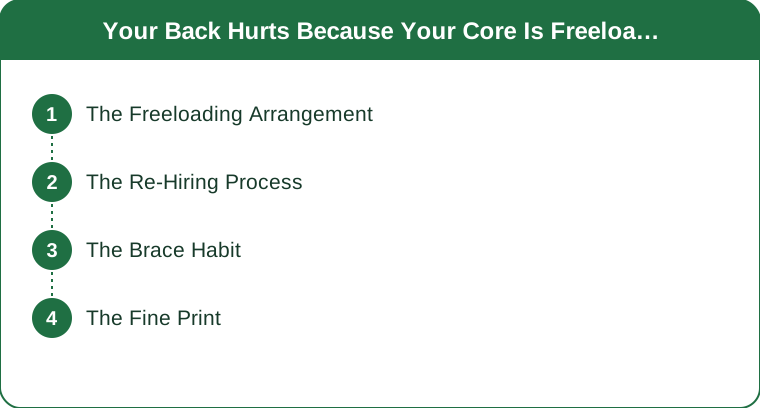
The Freeloading Arrangement
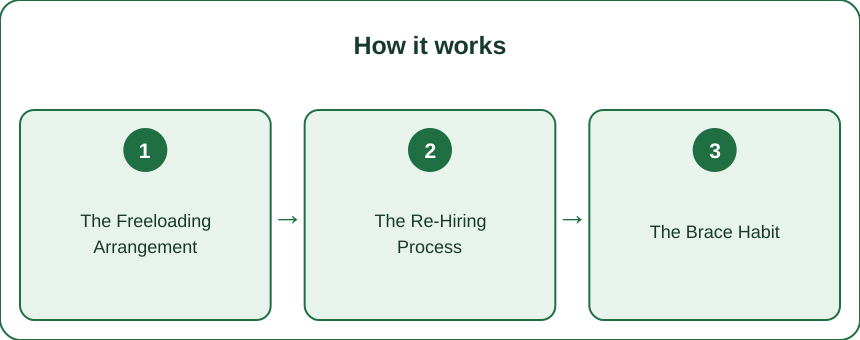
Your deep core — transverse abdominis, the body’s built-in corset — should brace the spine during every lift and twist. When it slacks, the lower back muscles improvise, badly, all day. The ache is overtime pay.
The Re-Hiring Process
Dead bugs (slow, exhaling, lower back gently pressed down), bird dogs (steady, no hip tilt), side planks (from knees is fine). Ten minutes, three times weekly — boring, precise, and the entire fix for most freeloader cases.

The Brace Habit
Before lifting anything — toddler, laundry, dumbbell — exhale and lightly brace like preparing for a gentle poke. The pre-lift brace is the core showing up to work on time. Make it automatic and the back’s overtime ends.
The Fine Print
Sharp pain, numbness, or pain radiating down a leg is not a freeloader problem — that is a see-a-professional situation, promptly. This guide covers the tired-ache genre only, and even there, patience beats heroics.
Dead bugs, bird dogs, side planks, pre-lift brace: rehire the corset and the martyr retires. Ten minutes thrice weekly — your lower back has been requesting this meeting for years.
Keep Reading
This article is for general informational and styling purposes only. Fit, sizing, and product availability may vary.